

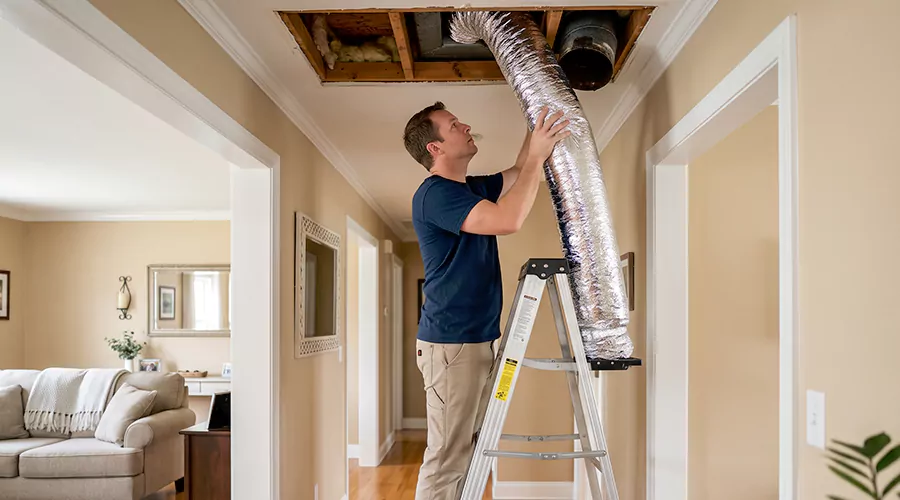
The strongest signs you may need air duct replacement include collapsed duct sections, extensive rust, severely damaged flexible ducts, and wet or mold-contaminated fiberglass duct material. Repeated air leaks and persistent airflow problems may also justify replacement when repairs cannot restore proper performance. However, uneven room temperatures or high energy bills alone do not prove that new ductwork is necessary.
Air ducts distribute heated and cooled air throughout a home. Supply ducts carry conditioned air from the HVAC equipment into rooms, while return ducts bring indoor air back toward the system. These passages must remain structurally sound and properly connected to deliver the intended airflow.
Over time, ductwork can become damaged by moisture or physical contact. Flexible ducts may be crushed or torn, while metal passages can develop corrosion where water repeatedly reaches them. Some installations also have design problems that prevent rooms from receiving enough conditioned air even though the duct material remains intact.
Knowing when to repair and when to replace ductwork helps homeowners avoid unnecessary work. A small leak in sound metal can often be sealed, but a collapsed flexible branch may need a new section. A qualified inspection should establish the extent of the problem before complete replacement is recommended.
How Do You Know if Air Ducts Need Replacing?
Air ducts generally need replacement when their material or construction can no longer support a durable repair. A disconnected joint may be restored, while a duct that has lost its shape or structural strength can require a new section. The decision depends on the condition of the passage rather than the age of the home alone.
Some warning signs are visible during an inspection of accessible ductwork. Others appear through poor airflow or recurring moisture problems. Symptoms inside the rooms help identify where to investigate, but the duct condition must be confirmed before replacement is selected.
1. Crushed or Collapsed Air Ducts
A crushed duct restricts the space available for air to travel through the system. Flexible ductwork is particularly vulnerable when stored objects or nearby construction materials press against it. The problem may also develop when a duct is squeezed through an opening that is too small.
A severely compressed flexible duct can deliver much less air than the room requires. Even when its exterior jacket appears intact, the inner liner may remain deformed. Cleaning the duct or applying sealing tape will not restore a passage that has physically collapsed.
Minor bends can sometimes be corrected by adjusting the routing and supports. However, a flexible branch with permanent crushing or substantial liner damage may need replacement. The new section should be installed without sharp kinks or excessive compression.
2. Extensive Rust and Corrosion
Metal ductwork can corrode when moisture repeatedly contacts its surfaces. This may occur near roof leaks or other water sources. Over time, the metal can lose strength and develop holes.
A small amount of surface rust does not automatically require replacement. Sound metal with limited localized damage may support an appropriate repair. Extensive pitting or multiple perforations indicate that the duct may no longer provide a reliable base for sealing.
The surrounding area should also be evaluated. Replacing a rusted section without correcting the water source can result in similar damage to the new duct. Moisture control is part of providing a durable repair.
3. Repeatedly Disconnected Duct Sections
A supply branch that repeatedly pulls away from its connection may indicate inadequate support or a damaged fitting. Warm or cooled air can escape into an attic or crawlspace instead of reaching the intended room. The problem may remain hidden until heating or cooling performance declines.
A single disconnected joint can often be restored using appropriate mechanical attachment and sealing. Replacement is more likely when the fitting or adjacent duct material is damaged beyond reliable repair. Flexible ducts that repeatedly tear near collars may also need new sections.
The support arrangement should be corrected at the same time. A newly installed duct can fail again when its weight continues pulling against the connection.
4. Torn or Deteriorating Flexible Duct Liners
Flexible ductwork contains an inner liner that carries air and an outer covering that protects insulation. Damage to either layer affects the system differently. A torn outer jacket can expose insulation, while a torn inner liner allows conditioned air to escape.
Small localized damage may sometimes be repairable using manufacturer-approved materials. However, extensive liner tears and multiple damaged areas can make replacement more practical. A deteriorating liner should not be covered with tape without assessing whether the passage remains sound.
The full affected section should be inspected. A flexible duct may contain damage beneath its outer covering that is not visible from a distance. Correct installation of a replacement requires restoring the inner connection, insulation, and exterior vapor barrier.
5. Wet or Mold-Contaminated Fiberglass Duct Material
Fiberglass duct board and internally insulated ducts can become contaminated when water enters the system. Porous materials are difficult to restore after persistent wetting or confirmed mold growth. Cleaning the visible surface may not adequately address contamination within the material.
The Environmental Protection Agency advises replacing wet or moldy fiberglass duct material. This differs from sound bare sheet metal, which may be cleanable under appropriate conditions. The duct material therefore plays a major role in the repair decision.
The moisture source must also be corrected. A roof leak or condensate drainage problem can continue damaging new duct materials if it remains unresolved. Replacement alone does not prevent future water-related contamination.
6. Severe Damage After a Water Leak
Water entering an attic or ceiling cavity can damage duct insulation and supporting materials. The actual effect depends on how long the materials remain wet and whether the air-carrying duct itself has been affected. Some metal ducts may remain structurally sound even when their surrounding insulation needs replacement.
Flexible ducts and internally insulated passages require closer evaluation. Wet insulation can lose its intended performance and may become unsuitable for continued use. If the liner or duct board has been damaged, replacing the affected section may be necessary.
The source and extent of water damage should be identified before work begins. Replacing sound ductwork is not always required when only an exterior insulation wrap is affected. An inspection helps distinguish these situations.
7. Persistent Airflow Problems Caused by Incorrect Duct Sizing
Some duct systems cannot deliver the required airflow because their branches are too small or incorrectly arranged. A room may remain uncomfortable even when the HVAC equipment is functioning normally. In this case, the problem involves the duct design rather than dirt or a minor leak.
Sealing an undersized duct does not increase its airflow capacity enough to correct every design problem. The system may need larger branches or additional return paths. The correct changes depend on heating and cooling loads and the pressure characteristics of the equipment.
A qualified HVAC contractor can evaluate airflow and perform appropriate duct design calculations. Replacement should follow a design rather than simply match the dimensions of the existing inadequate duct.
8. Multiple Areas of Structural Damage
One damaged duct connection does not mean the entire system needs replacement. However, numerous deteriorated sections can make repeated localized repairs less practical. The extent and distribution of damage should guide the decision.
For example, an attic containing several crushed flexible branches may require replacement of those runs. Sound main ducts could remain in service. A broader replacement project may become appropriate when damage affects most of the air distribution network.
A contractor should identify exactly which sections are defective. A recommendation to replace everything should be supported by documented conditions rather than a general claim that the ductwork is old.
9. Recurring Problems After Proper Repairs
Air leakage that returns after appropriate repairs may indicate movement or continuing structural deterioration. However, not every recurring symptom means replacement is necessary. A leak may return because the duct was never properly supported or because the underlying moisture problem remains unresolved.
The cause of the failed repair should be examined before selecting a new approach. A sound duct with inadequate fastening may still be repairable. A deteriorated section that cannot retain a secure connection is a stronger replacement candidate.
Comparing the condition of the repaired area with nearby duct sections helps determine the necessary scope. The goal is a durable correction rather than repeatedly applying sealant to a failing material.
10. Ductwork That Cannot Be Cleaned or Restored Safely
Some ducts contain materials or damage that make ordinary cleaning inappropriate. Fragile internal liners can tear during aggressive cleaning, while wet contaminated fiberglass may require replacement. The feasibility of cleaning depends on the construction and actual condition.
The EPA notes that replacing accessible flexible ductwork can sometimes be more economical than cleaning it. This does not mean every flexible duct should be replaced. Sound material with light ordinary dust can remain in service.
Replacement is most appropriate when cleaning would damage the passage or fail to resolve the identified problem. A qualified assessment helps determine whether the existing material can be restored.
What Are the Common Symptoms of Failing Air Ductwork?
Duct problems often appear as changes in room comfort or airflow. These symptoms help identify areas requiring inspection, but they can also result from dirty filters or HVAC equipment problems. The underlying defect must be established before replacement is recommended.
Common warning signs include:
- One or more rooms receive very weak airflow.
- Conditioned air escapes visibly from a disconnected attic duct.
- Flexible ductwork has been crushed or torn.
- Several metal sections contain extensive corrosion.
- Water-damaged insulation remains wet or deteriorated.
- Significant confirmed mold affects porous internal duct material.
- Damaged branches repeatedly separate from their fittings.
- Persistent airflow restrictions remain after equipment problems are ruled out.
- The existing duct layout cannot deliver the airflow required by the equipment.
- Several branches have structural defects that make repeated patching impractical.
- Ceiling or floor register boots have substantial physical damage.
- A concealed duct section has collapsed and cannot be restored.
A room that is difficult to cool does not necessarily have damaged ducts. Poor insulation and sun exposure can also contribute to uneven temperatures. The technician should compare airflow and examine the system before recommending duct replacement.
What Is the Difference Between Repairing and Replacing Air Ducts?
Repair is appropriate when the duct material remains sound and a localized defect can be corrected durably. Replacement is more suitable when the affected section has lost structural strength or can no longer carry the required airflow. The distinction helps control costs and avoid unnecessary demolition.
| Duct Condition | Repair or Replacement? | Reason |
|---|---|---|
| Small leak at sound metal seam | Repair | Joint can be sealed |
| Loose but sound duct connection | Repair | Connection can be secured |
| Minor exterior insulation damage | Repair | Air passage remains usable |
| Small localized hole in sound metal | Often repair | Suitable patch may restore integrity |
| Severely crushed flexible duct | Replace affected section | Passage cannot maintain its shape |
| Extensive rust and perforations | Replace affected section | Metal is structurally weakened |
| Wet or moldy fiberglass duct material | Replace affected material | Cleaning may not restore it |
| Undersized duct branches | Redesign and replace as needed | Existing dimensions restrict airflow |
| One disconnected register boot | Usually repair | Localized connection problem |
| Widespread deterioration | Consider broader replacement | Multiple sections may no longer be serviceable |
The recommendation should identify the damaged portions rather than automatically call for complete system replacement. A home may need several flexible branch runs replaced while retaining sound main supply ducts. The correct scope depends on the inspection.
Does Old Ductwork Automatically Need Replacement?
No. Ductwork does not have a universal expiration date after which replacement becomes mandatory. Material quality and installation conditions influence how long it remains serviceable. A sound metal duct may continue functioning for many years when properly maintained.
Flexible ductwork can deteriorate from physical damage or environmental exposure, but age alone does not establish its condition. A twenty-year-old duct that remains intact may perform better than a newer branch that has been crushed. Inspection is more useful than the installation date by itself.
An older system may still need modifications if it was designed for different heating and cooling equipment. New HVAC equipment can have airflow requirements that differ from the original installation. The duct network should be evaluated when major equipment changes are planned.
In older buildings, unfamiliar duct insulation or wrapping may contain asbestos. Suspected asbestos-containing material should be assessed by a qualified specialist before disturbance. Replacement planning must account for safe handling rather than treat every old duct as ordinary material.
Can Leaky Air Ducts Be Sealed Instead of Replaced?
Yes. Many leaky air ducts can be repaired when their materials remain structurally sound. Appropriate HVAC mastic and approved metal-backed foil tape can seal suitable joints. Loose connections must also be mechanically secured before the sealing material is applied.
ENERGY STAR identifies leaks and poorly connected ducts as common causes of wasted conditioned air. It recommends sealing accessible joints and insulating ducts in unconditioned spaces. A contractor should also inspect for disconnected branches or physical restrictions.
However, sealing is not a substitute for replacement when the duct has collapsed or become severely corroded. The sealant requires a stable surface and sound connection. Applying it over a failing section can delay rather than solve the problem.
A qualified contractor can determine whether localized sealing is sufficient or whether damaged sections require replacement. Duct leakage and airflow testing may help verify the result.
How Do You Inspect Air Ducts Before Replacement?
An inspection should establish both the physical condition of the ducts and how well they deliver air. Looking only at one register does not reveal the full network. The evaluation should include safely accessible supply and return passages.
Step 1. Record the Comfort Problems
Identify rooms that receive weak airflow or experience persistent temperature differences. Note whether the issue occurs during heating, cooling, or both. This information can help distinguish a shared duct problem from an equipment issue affecting only one operating mode.
Record any recent renovation or equipment replacement. A duct may have been disturbed during attic work or other maintenance. The timing can provide useful clues before the inspection begins.
Step 2. Check the HVAC Filter and Registers
Inspect the filter according to the equipment manufacturer's instructions. A heavily loaded filter can reduce airflow throughout the home without any duct damage. Confirm that supply registers and return grilles are not blocked by furniture or other objects.
These checks help rule out simple restrictions. A properly functioning duct cannot deliver the expected airflow when the system's filter or return path is severely blocked. The technician should address these conditions before blaming the ductwork.
Step 3. Inspect Accessible Duct Sections
With the system switched off, examine safely accessible ductwork for visible damage. Look for loose metal joints and crushed flexible branches. Check insulation for tears or moisture staining.
Do not enter unsafe attics or crawlspaces. Exposed ceiling drywall cannot support a person's weight, and some building spaces may contain electrical or material hazards. Inaccessible ducts should be evaluated by a qualified contractor.
Step 4. Determine the Duct Material
Identify whether the system uses sheet metal or flexible ducts, duct board, or internally lined passages. Each material has different repair possibilities. A patch suitable for sound metal may not restore damaged fiberglass duct board.
Some systems use several materials within the same network. The repair plan should address each affected section appropriately. A contractor should not recommend replacement based only on the material name without evaluating its actual condition.
Step 5. Evaluate Airflow and Leakage
Professional airflow measurements can help determine whether a restriction is affecting the rooms. Duct leakage testing may also identify significant openings. These measurements provide more useful evidence than temperature complaints alone.
A pressure test may confirm that the system leaks without locating every defect. A physical inspection is still needed to identify damaged branches. The tests should be interpreted together with the observed duct condition.
Step 6. Check for Moisture
Inspect accessible duct insulation and nearby building surfaces for water damage. Look for roof leaks or condensation conditions that may have affected the system. Persistent dampness can make replacement necessary for certain porous duct materials.
The source must be addressed before installing new ductwork. Otherwise, replacement materials may be exposed to the same moisture problem. A drainage or building-envelope repair may be part of the overall project.
Step 7. Review the Duct Design
When airflow problems persist without obvious damage, the duct sizing and layout should be evaluated. A contractor may use ACCA Manual D or another applicable design method to determine suitable duct dimensions. Equipment airflow requirements and room heating or cooling loads should guide the design.
Replacing a duct with another section of the same inadequate size may leave the original complaint unresolved. A proper design review helps determine whether replacement should involve larger branches or a different return arrangement.
Step 8. Compare Repair and Replacement Options
Ask the contractor to identify which sections can be repaired and which genuinely need replacement. A written proposal should explain the reason for each recommendation. Replacing only damaged runs may be sufficient when the remaining ducts are sound.
The comparison should also consider access and expected durability. A localized repair may be reasonable for exposed metal, while widespread flexible duct damage may justify replacing several branches. The decision should follow documented conditions.
When Should You Replace All Air Ducts Instead of One Section?
Whole-system replacement becomes more practical when damage affects most of the duct network or the existing layout cannot support proper airflow. However, this is less common than needing a limited repair or replacing selected branches. The contractor should demonstrate why retaining sound sections is unsuitable.
An older home that receives a major HVAC redesign may benefit from replacement when many ducts are incorrectly sized. Repeated damage across numerous branches can also justify a broader project. The new system should be designed for the home's actual heating and cooling needs.
A single torn flexible duct does not justify replacing every metal trunk and return. Likewise, ordinary dust deposits are not a reason to replace sound ductwork. The extent of replacement should reflect the affected components.
When substantial demolition is involved, planning should account for access to concealed spaces and restoration of ceilings or walls. The project may require several trades when ductwork passes through finished areas.
What Happens During Air Duct Replacement?
Professional duct replacement begins with inspection and design. The contractor identifies the damaged sections and determines the duct dimensions and routing needed. The goal is to restore the intended airflow without introducing new leaks or restrictions.
The existing ducts are then disconnected using appropriate procedures. Damaged material is removed without disturbing unrelated equipment or unsafe building materials. New duct sections are installed with suitable mechanical supports and connections.
Flexible ducts should be routed without sharp kinks and should not be compressed by framing or stored objects. Rigid metal connections require appropriate fastening and sealing. Insulation and exterior vapor barriers must be restored where required.
After installation, the contractor should inspect the completed system and test relevant airflow and leakage conditions. Room comfort and system pressure may also need evaluation. The work is not finished simply because new duct material has been installed.
How Much Does Air Duct Replacement Cost?
Air duct replacement cost depends on how much of the system needs to be replaced and how easily the affected sections can be reached. Replacing one accessible flexible branch is a different project from rebuilding an entire duct network above finished ceilings. Material selection and labor access can significantly change the total.
A useful estimate should separate duct materials, installation labor, insulation, and any necessary building repairs. If the project requires ceiling removal or construction work, those costs should be identified. New register locations and duct redesign can also affect the scope.
Do not assume whole-house replacement is the correct option simply because its quoted price is presented alongside a smaller repair. Ask why each existing section cannot remain in service. The best value comes from correcting the actual problems rather than automatically purchasing the largest project.
Can New Air Ducts Improve Heating and Cooling?
New ductwork can improve performance when it replaces a damaged or incorrectly designed air distribution system. Restoring a collapsed passage can increase airflow to the affected room. Proper sealing and insulation can also reduce unwanted losses through ducts installed in unconditioned spaces.
ENERGY STAR estimates that typical homes can lose approximately 20% to 30% of the air moving through duct systems because of leaks and poor connections. Correcting substantial leakage may improve room comfort. However, the actual benefit depends on the original defects and the quality of the repair.
Replacing sound ducts with similar new material does not automatically produce significant energy savings. Proper duct sizing, sealing, insulation, and airflow balancing are what matter. A contractor should evaluate system performance after the project.
What Mistakes Should You Avoid When Replacing Air Ducts?
Poor installation can recreate the same problems that caused the original system to fail. A new flexible duct can become restricted if it is installed with sharp bends or insufficient support. Incorrect sizing can also leave rooms uncomfortable despite the use of new material.
Avoid these mistakes:
- Replacing all ducts without documenting the damaged sections.
- Reusing an inadequate duct design without evaluating airflow.
- Installing flexible ducts with sharp kinks or compression.
- Leaving duct connections mechanically unsecured.
- Using ordinary cloth-backed duct tape as a permanent seal.
- Failing to insulate ducts in unconditioned spaces as required.
- Replacing wet ductwork without correcting the water source.
- Disturbing suspected asbestos-containing materials without proper assessment.
- Blocking return airflow through incorrect redesign.
- Skipping performance checks after installation.
- Using the wrong duct material for the intended application.
- Treating combustion exhaust flues as ordinary room-air ducts.
Fuel-burning furnace flues and combustion vent connectors carry exhaust gases and have separate safety requirements. They should never be replaced or repaired using ordinary supply duct methods. Qualified technicians must handle combustion venting concerns appropriately.
How Can You Make New Air Ducts Last Longer?
Duct durability depends on sound installation and protecting the materials from damage. Flexible ductwork should be supported according to its manufacturer's requirements. Heavy stored objects and sharp tools should not be placed against exposed branches.
Metal ducts should remain protected from persistent water exposure. Roof leaks and condensation problems should be corrected promptly. Damaged insulation should also be restored before moisture or heat loss creates further issues.
Check accessible joints during routine HVAC maintenance for visible separation. Keep air filters in suitable condition and repair return-side openings that draw dust from unfinished areas. These actions can reduce contamination and help identify damage before it becomes widespread.
When Should You Call an HVAC Professional?
Professional evaluation is appropriate when structural duct damage is visible or when persistent airflow problems remain after simple filter and register checks. A contractor can assess the duct materials and determine whether repair is possible. Airflow and leakage testing may support the recommendation.
Significant moisture damage also deserves prompt attention, particularly when fiberglass duct materials are affected. A qualified evaluation can determine what must be removed and whether the original water source has been corrected. Unknown older insulation may require specialized assessment before disturbance.
Ask for a written proposal showing the locations and reasons for replacement. A reliable contractor should explain which existing components can remain in service and how the new system will be tested. This helps distinguish necessary replacement from unnecessary work.
Conclusion
Air duct replacement is most appropriate when the existing passages are severely damaged or cannot be restored through durable repairs. Crushed flexible ducts, extensive corrosion, wet fiberglass material, and unsuitable duct sizing are important warning signs. Minor leaks and loose connections can often be repaired without replacing the full system. The decision should be based on physical inspection and airflow performance rather than age alone. Before approving replacement, ask for documentation of the damaged sections and a clear explanation of the proposed design.